Berani dalam Benar : From heatwaves to Atomic heats
Dzulkifli Abdul Razak
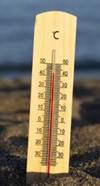
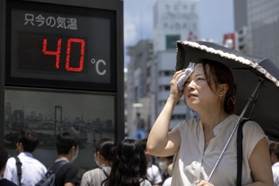
More recently, the Japan Meteorological Agency introduced a new term in its weather-forecast vocabulary when temperatures exceed 40 degree C, indicating extreme weather is fast becoming a norm. For example, kokushobi (“severely” hot day), natsubi (summer day, for temperatures above 25C), manatsubi (midsummer day for 30C) and moshobi (extremely hot day for 35C). They are chosen after an online survey in February and March that offered 13 candidates, combined with expert opinion. Evidently, of the 108 days on record above 40C since 1872, as many as 41 occurred between 2023 and 2025, meaning more than a third of all such days in 150 years of recordkeeping are from just the last three years. Overall, the summer of 2025 alone was the hottest on record, with average temperatures between June and August running 2.36C above the 30-year average.
Of the 153 meteorological stations across the country, 132 recorded new highs in that year. It is said that Japan’s warming is outpacing the global average. Over the past century, global temperatures have risen by around 0.73C, while temperatures in Japan have risen by 1.13C. Consequently, health impact of such extreme heat are regarded severe with heatstroke hospitalisations spike sharply during periods of above 35C, and deaths among elderly residents are a persistent feature of the summers.
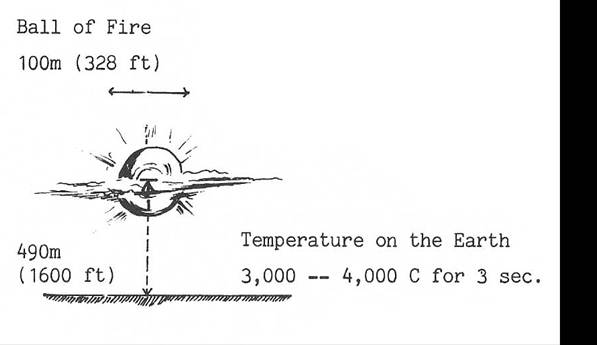
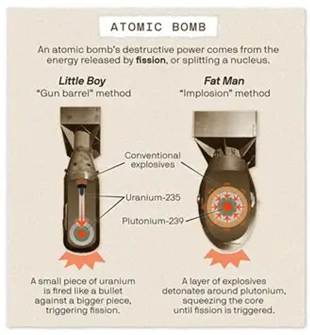
Talking about health one cannot miss the impact of bombings directly and indirectly. The latter refers specifically to the Atomic bombs dropped over Hiroshima and Nagasaki coincidently 81 years ago last week, on August 6 and 9 respectively. Heat (or thermal radiation) is named as one of the three principal effects of a nuclear explosion, emitted in the first few seconds after detonation and is immediately capable of causing intense injury known as "flash burns." Approximately 65 to 85 percent of the injured survivors at both cities suffered such burns. About 30 percent of the total energy released in an air burst is emitted as heat. At Hiroshima, for example, surface temperatures at ground zero have been estimated as briefly reaching 3000 to 4000 degrees Celsius. For weapons of the size produced during the Manhattan Project, direct heat from the explosion is capable of inflicting severe burns on exposed skin, and igniting such flammable materials as newspaper and grass, at a distance of 1 to 3 km. Extreme heat and violent action of nuclear weapons make it possible that an explosion will generate a firestorm, in which numerous individual fires merge into one giant fireball (read, wild fires, now costing billions for Europe alone) that can engulf an entire city. Because fire requires oxygen as fuel, a large fire will begin to suck in air from surrounding areas.
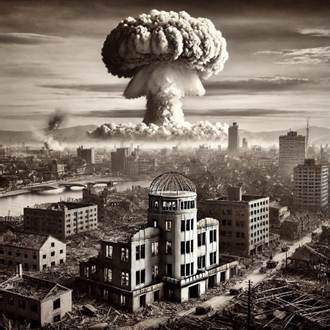
In a firestorm this phenomenon can generate hurricane-strength winds and suck the air out of underground shelters, suffocating those inside who might otherwise have been protected from the flames. The "Little Boy" bomb dropped on Hiroshima generated a firestorm which was formed from a fireball to radiate even more (Atomic) heat. Over time, most of the emitted radiation is visible and infra-red. When absorbed by people or objects, this form of high-energy heats up the person or object with dire consequences.
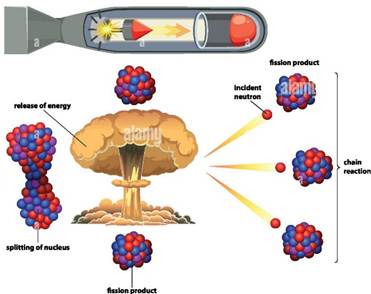
Given that expert projections predict another record-breaking summer in 2026, the current heat waves must be seen from the perspective of a climate crisis that eventually translates into the A-Bomb-like phenomenon. This time not limited to Hiroshima and Nagasaki but as what is experience today heat radiation penetrates throughout the world regardless. No new vocabulary can describe the scourging climate where the temperatures exceed three digits because the planet will be under uncontrolled firestorm on a “severely” hot day! We will all be dead!
Today is August 9, when Nagasaki was A-bombed generating a windstorm several kilometres wide that carried ash, dust, and debris over the mountain ranges surrounding Nagasaki. Approximately 20 minutes after the bombing, a black rain fell with the consistency of mud or oil. The rain carried radioactive material and continued for one to two hours. The heat produced was equivalent to 21 (compared to Hiroshima 15) kilotons of gunpowder (TNT) which has no comparison to conventional weapons, so intense that it left permanent evidence of tremendous heat caused by the Atomic killer. Yet such gruesome analogy that Nagasaki mayor dubbed as "absolute evil" has been ignore despite the ever expanding heat extremes experience today!
It always seems impossible until it is done Nelson Mandela (1918-2013)