Berani dalam Benar : The illusive tatakola
Dzulkifli Abdul Razak
Berani dalam Benar: The illusive tatakelola
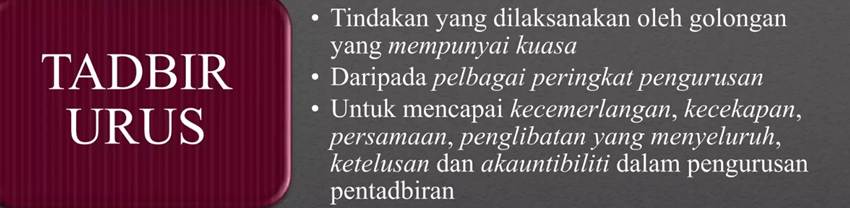
Some four years ago, we were taught a new word, tatakelola. It means “governance.” Not that its meaning is new to us, only new sounding! We are used to “tadbir urus” in the local language. The other is more like something borrowed from the neighbours. Some are very fond of such habits, which indirectly is an admission that we never ever had any idea to administer or how to do so! This is despite the contrary, long before the term “governance” became fashionable, especially after the coming of the colonials with their preferred ways, oblivious of what the context is locally.


Amidst the rude intervention, we were made to understand from painstaking research that Hukum Kanun Pahang (HKP) is already in existence as evidence, among many others which were gradually cast aside, in theory and practically so by the colonial powers. HKP is Malay for 'Pahang Laws' or ‘Canons’ – the legal code of the old Pahang Sultanate. Reportedly, it contains significant provisions that reaffirmed the primacy of Malay adat (decorum), while at the same time accommodating and assimilating the Islamic law. Allegedly compiled during the reign of the 12th Pahang Sultan, it is regarded as one of the oldest digest of laws in the Malay World. In 1623, following the union between Pahang and Johor, HKP was adopted in Johor, not before influencing other parts of the Malay Archipelagos (Nusantara). By 2012, HKP was recognised as a tangible heritage object, included in the Nation Heritage List of Malaysia. So much for tatakelola.

Fast forward to the many unexpected recent incidents, tatakelola is beginning to sound like “tak tak kelola” – that is, a double-negative! In short, no, no governance, especially in the context of the so-called “house arrest” linked to a former prime minister (PM), after a payment of RM50 million as a condition. It is not only limited to the operational issues but also to that of structures, processes, and principles in its implementation at the eleventh hour. In broader terms, it seems to violate good governance on several fronts deeply buried in the word “tata” which foremost includes being “transparent,” “systemic,” “orderly,” “sustained” and “procedural,” as well as being honest and highly ethical.



Last week, another challenge appeared when reportedly the Malaysian Bar sought to quash the Federal Territories Pardon Board decision to allow the former PM to serve his remaining six years of the SRC International jail sentence under house arrest " on the grounds that the decision was 'unconstitutional'". On Nov. 10, the said ex-PM allegedly arrived at his home (newly designated as a prison) at Jalan Langgak Duta to continue serving his remaining prison sentence. He has been incarcerated at Kajang prison since Aug 23, 2022.
Previously, the order was served for the remainder of his prison sentence under house arrest at Langgak Duta, with immediate effect. But the development followed the High Court's decision on Nov 10 to set aside the order of discharge, and replace it with a new order for the former PM. The decision was made after hearing an application by the Attorney-General's Chambers to review the release order issued on Nov 6 and obtain a new order. Apparently with "clearly stated in the conditions and details outlined in the directives and procedures.”
In other words, prior to this, the “conditions and details outlined” are vague (referring to the “tata” portion) that let loose many unwanted and confusing comments depending on who you are (not) listening to. Some to the extent of being rude, crass and maddening! In summary, there is little, if any, resemblance of tatakelola even by those who promote it in the first place. After almost four years, nothing came close to walking the talk, instead more to the contrary creating unnecessary confusion which speaks volumes as to where the country is really heading.
On top of that, the issue of a minister volunteering to resign, and later making it conditional, turned tatakelola into a game of whim and fancies within the context of Desperate Action Politics! According to media reports, after submitting his resignation letter as Transport minister to the prime minister on Sept 28, the minister conditionally extended his stay based on the house arrest drama script! After all, the initial intention to resign was announced on Sept 19, following the party Central Executive Committee meeting; amid the controversy surrounding the conditional pardon granted to the former prime minister. Other party ministers and deputy ministers were spared, although arguably there are at least two others who would have been most “qualified” to quit, if tatakelola is upheld in the real sense. Sadly, it was trampled upon instead, with no qualms at all. More ironically still, when all is over and done with, one of the two most "qualified" candidates being a government representative on the Pardon Board, suddenly expressed regret over the resignation as Transport Minister. What is more, when she allegedly said she “should have been the one to step down” – something that is inherently obvious under the tatakelola rules, but conveniently ignored despite the claim that it is "a matter of principle," not personal one of that of political desperation!
As a parting note: the vice president (VP) of the country from which we borrowed the term has been forced to resign, ending a desperate political drama amid mounting calls for his impeachment related to a tatakelola-tainted scandal! The controversy is simple enough, supposedly centred on a single document related to a completion of senior high school which he was unable to produce in order to keep the VP position. Goodbye, tatakelola, tata!