Berani dalam Benar : Education in Black October
Dzulkifli Abdul Razak
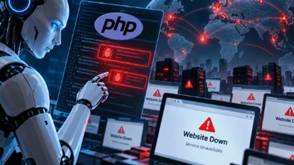
The issue of education in the Age of AI seems to have come full circle with mounting uncertainty associated with the intrusion of AI of late. In the past week, issues of crucial vulnerabilities have surfaced unexpectedly in several services and programmes. The most concerning is said to affect a programming language commonly used by as much as 70 percent of the websites, like Facebook and Wikipedia. The language known as PHP (short for Hypertext Preprocessor), is an open-source web programming, maintained largely by volunteers. The event is labelled as "Black October 2026" referring to the series of cybersecurity threats involving software vulnerabilities, website disruptions, and other security breaches reported during October. Education is no exception.


In 1995, PHP was started by a Danish-Canadian programmer, Rasmus Lerdorf, who sought to track how many people visited his online resume. Over time, others around the world improved Lerdorf’s software, and it grew in popularity, since as with other open-source coding projects, anyone could download, modify and share improvements voluntarily. To the extent that such security flaws in the code encrouched into models used by OpenAI and Google for example. Thus, many governments and related organisations – like hospitals, police – worldwide reportedly took down their websites as precautionary steps. Others like airlines, banks and manufacturers are no exceptions, with many more servers, devices and databases of the non-traditional sectors being exposed. To some, this may translate to potential catastrophic or existential risks to humanity as a whole because it highlighted the role of AI in attacking the internet as well.

By 2021, a dedicated nonprofit, the PHP Foundation, started to coordinate its development while remaining as on an open-source platform with a meagre budget. Reportedly even the world’s largest corporations, like Meta, and Anthropic, apart from Google, and OpenAI, depend on volunteer-built, open-source infrastructure in uncovering the security flaws at a pace that needs far more resources to keep up. The vulnerabilities remained embedded in the PHP code for more than a decade, and were unnoticed, because it is said to be too complicated for humans to detect them sans advanced AI.
In Malaysia, a surge is expected in the coming year as hackers allegedly resort to “malicious” AI involving larger platforms and faster speed. Small and medium enterprises are particularly vulnerable due to the limited resources allocated over business priority. Shortage of professionals in the relevant areas adds to the prevailing needs, and time to respond to newly discovered threats.
A research scientist at MIT’s FutureTech, Peter Slattery, who studies how cybersecurity experts are dealing with the new technology and tracks real-world incidents involving AI reckoned: “There’s been a lot of people in the AI safety community that said this is one of the first areas where we are going to see the harmful impact of AI.” Some even alleged that it may return to the early days of the internet. After all, the software that lets a computer communicate with others is often open source too. Likewise, it goes without saying that most of the digital infrastructure used by consumers is powered by open-source software as well. For example, the Mozilla Firefox browser is open source, as are languages like Perl, Python, and JavaScript. Mozilla, alone, claimed to have found more than 400 security vulnerabilities recently, a significant find from the previous record of 76 bugs discovered just one month earlier.
Slattery was quoted as saying the database of incidents he and his colleagues maintain shows that an increasing number of vulnerabilities are being detected, and it is a matter of time before some are exploited in the real world. “We are starting to see both a lot more vulnerabilities detected and addressed in time, but also attacks on a wide range of systems,” Slattery added.
In short, there can be a major disruption, and the critical role of open-source software in ensuring that the whole ecosystem is inaccessible to malicious hackers or systems to exploit it is still wanting. To begin with, on a personal basis, the use of strong and unique passwords are advocated. Enabling two factor authentication where available, adds another layer of protection to important accounts is encouraged. When a security alert is suspected, make a report as soon as possible of any attempted exploitation. The real concern is whether attackers successfully accessed systems, stole information, or disrupted essential services. Hence, a heightened awareness for a careful educational response and attention is critical in curbing the harmful activities of AI moving forward.