Berani dalam Benar - An assault on the Sustainability-led University
Dzulkifli Abdul Razak
Berani dalam Benar: An assault on the Sustainability-led University
The APEX anniversary for Universiti Sains Malaysia (USM) on September 4, passed without a hitch. As Malaysia’s leading public universities, it achieved a significant milestone by securing position among the top 5 universities in the world in the Times Higher Education Impact Rankings (THEIR) 2026. THEIR is said to “evaluate universities based on their contribution to the United Nations Sustainable Development Goals (SDGs), unlike traditional [commercial] university rankings that focus mainly on academic reputation, research output, or teaching quality.”
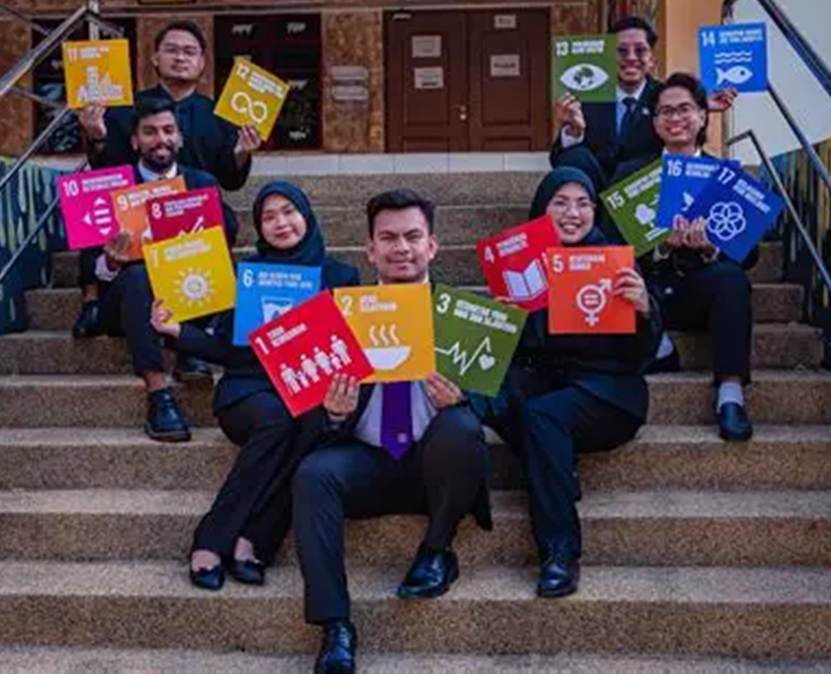

In the 2026 edition of THEIR, USM stood out among more than 1,600 universities worldwide, this time at an impressive 5th place globally among the select group of universities worldwide that are leading in sustainability and societal impact. Do or die, rather the Publish or Perish!
This achievement put Malaysia as a new global hub for higher education, namely SDGs. This recognition boosts the reputation of USM among international students and academic partners as being deeply committed in addressing human-centric issues. As the world population embraces greater values of sustainability and its impact on community-driven education, the success of USM marks an important step forward. As a comparison based on THEIR, in 2024, USM is ranked 14th in the world.
That said, APEX is the lynchpin in making the achievement possible. It could be traced as far back as 2005, when USM became one of the seven pioneering Regional Centres of Excellence (RCE) of Education for Sustainable Development (ESD) globally, as acknowledged by the United Nations (UNU) in Tokyo. This is followed by USM being selected as the best research-intensive university nationally, a year preceding the APEX sole award. Indeed, after 18 years, USM remains the only awardee which put it a class above the rest, after winning over nine bids from other Malaysian institutions of higher education.
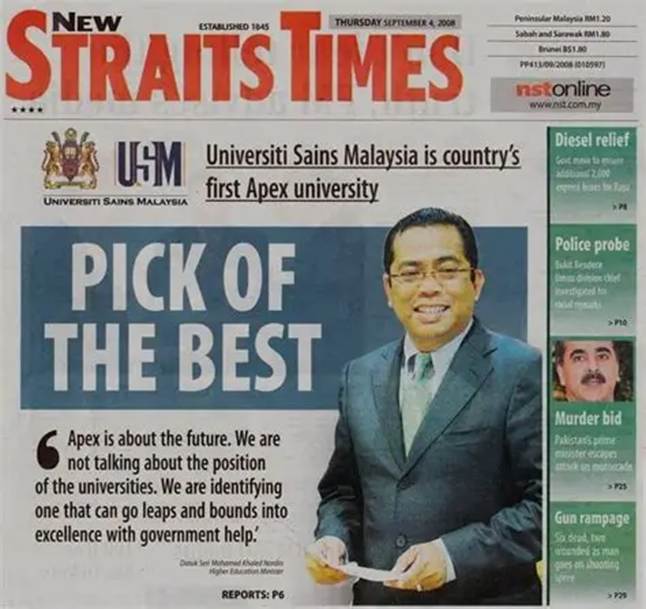
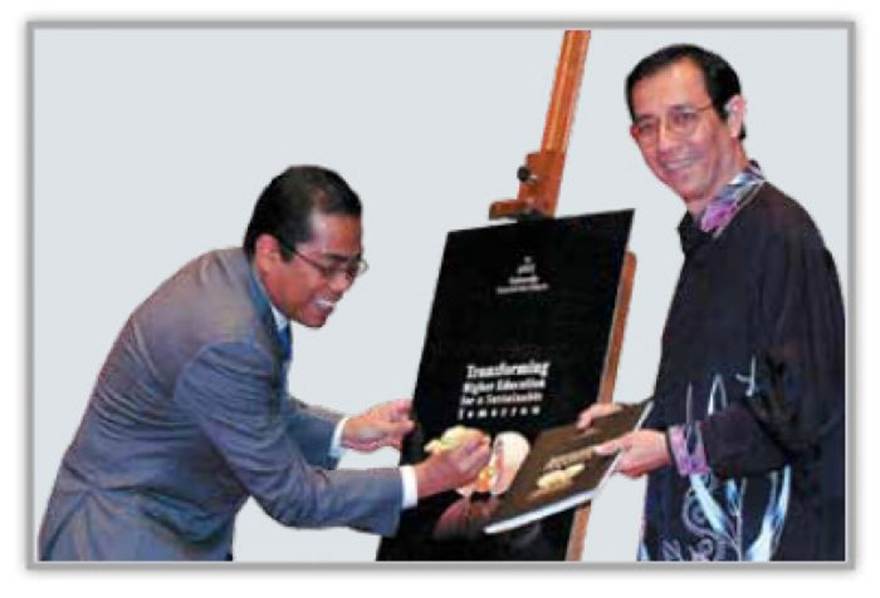
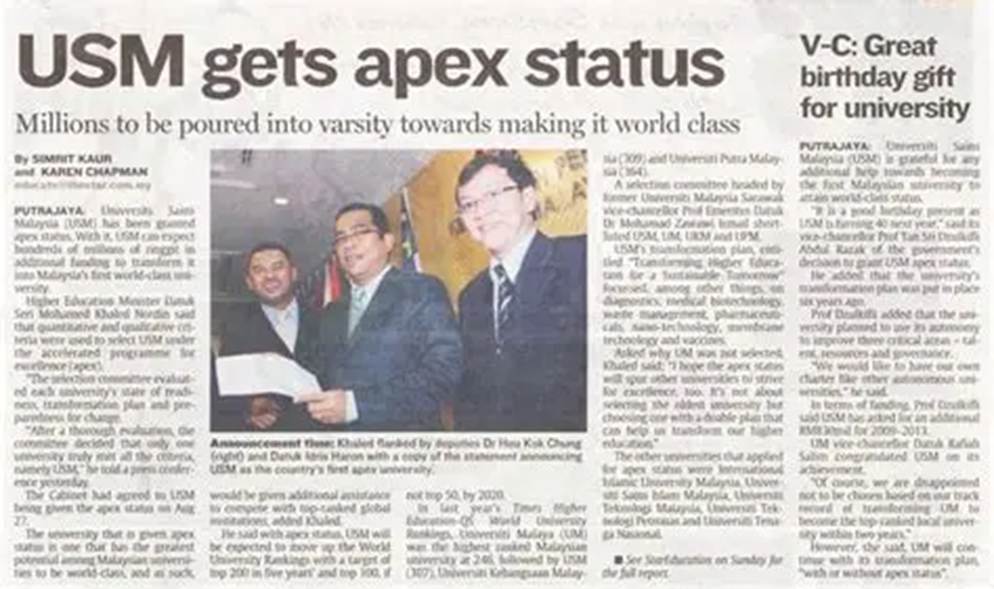
Under the APEX bid, the theme of Sustainability-led University was picked following an intense Scenario Planning Workshop conducted by a world-renowned futurologist – a first in the local education sector. The theme is selected from six others based on tried and tested methodology. It fits well with the government’s strategic outlook in 2007-2008 for a university of the future. This is well demonstrated in USM APEX’s vision: Transforming Higher Education for a Sustainable Tomorrow.
Needless to say, USM since its inception in1969, has been set by the first Vice-Chancellor to be nature-friendly when the term Sustainable Development was not even coined. Yet, the ecological and pristine status of the university has never been compromised during its continuous development leading to the APEX endeavour some 40 years later. It is almost destined through the succession of committed leadership till then. The rule of thumb is that no tree is to be cut or removed without the authority of the Vice-Chancellor. This follows established norms laid down by previous occupants of the campus evident by the well-manicured padang on both sides as one approaches the beautiful surrounding marked by a variety of trees that stood there for tens of years. Some are younger, as many more were planted later, to keep the balance between natural and built areas in good proportion. Notably the rows of trees along the padang lining the fences, and also the so-called Convex area that is primarily used during the Convocation period. Some areas are deliberately left untouched like the popular "durian valley,” and more recently “the ecological hub” preserved as living labs. If trees have to be removed for some unavoidable reasons, they are dug out and replanted elsewhere appropriately. This has happened when USM was used for a Merdeka celebration to host the march past parade in the 1990s!
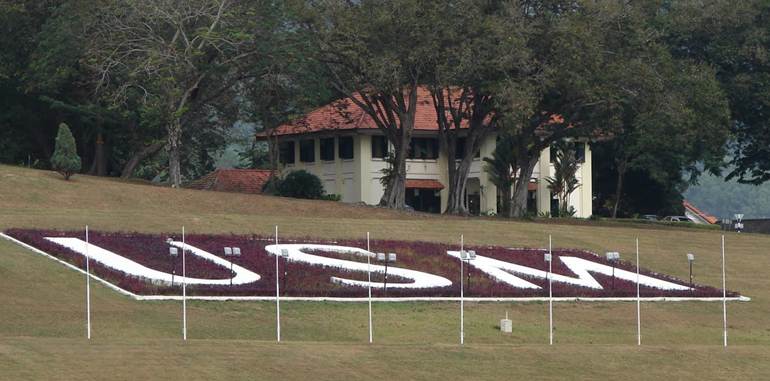
Unfortunately, this is not the case anymore. Of late, it has been pointed out that a row of well-endowed trees against the fencing on the right (see picture below, dated 2011) as one moved into the campus have been “removed” (cut?) intentionally to make way for the construction of the Penang Mutiara Line, a new light transit rail (LRT), of late! Not only is this considered affront to the USM well-established tradition for more than 50 years, more so now as a APEX status well-recognised beyond Malaysia to remain ecological sustainable. And, should be respected by the university leadership! Otherwise, APEX is nothing more than a lame-duck!
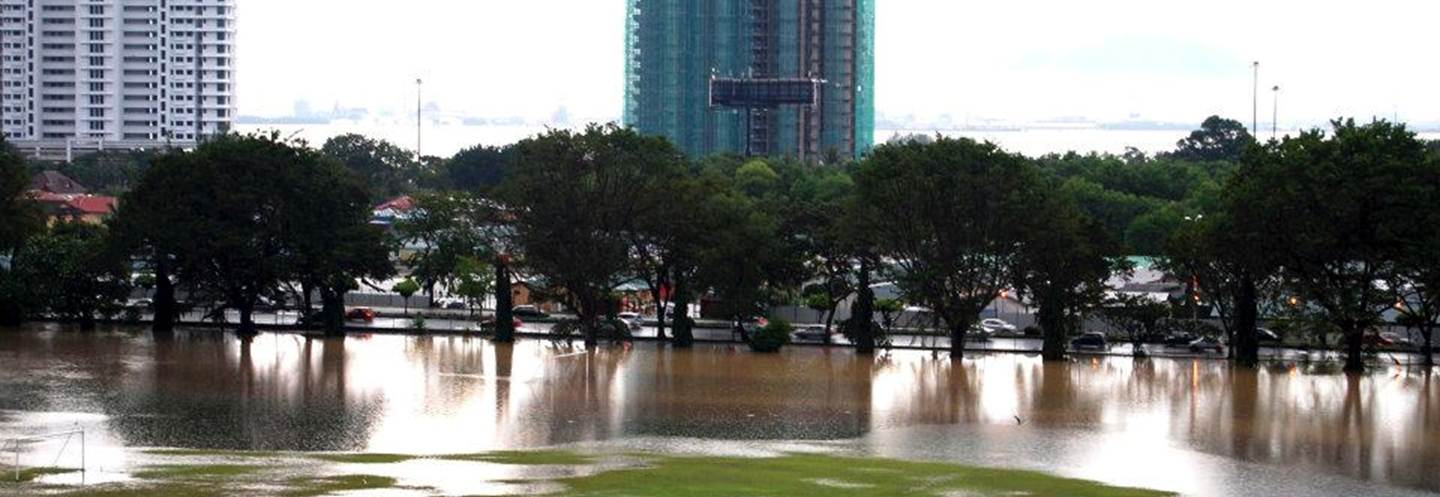
To counter this, the Penang State Government has always championed to realise the vision of a “Cleaner, Greener, Safer, Healthier, and Happier” state which is “advertised” at strategic spots statewide. In fact, in response to the global climate change issues and evolving paradigm of sustainable development, a Penang Green Council was established to facilitate and mooted Penang Green Agenda (PGA). The agenda will take on technical experts and scientists to look into sustainability aspects of Penang, including developing sustainability indicators which is the step in the right direction that allows for “a scenario analysis to assess the impacts of environmental issues on Penang State’s sustainability”. PGA will also engage all stakeholders and people of Penang to identify and combat the current and future environmental challenges of the state, proposing feasible solutions, which at once bring the issues of tree “disappearance” to the fore. Succinctly, have the stakeholders in USM been engaged? Or at least the top management of USM? If so, what is the outcome of the engagement that could explain the current unsustainable state of affairs? Or have they been transplanted elsewhere? Where, then? The “eco-hub”?
More urgently, PGA reportedly consults various experts that include those in USM. It envisioned that “by 2030, Penang aspires to be the greenest state in Malaysia driven by a green economy, innovative governance with 4P partnerships (public, private, people, professional) and sustainability-led development agenda.” It is therefore desirable that the related issues raised are not buried underground and remain unexplained putting the APEX status into question after the hard-earned recognition. Moreover by 2050, Penang hopes for a high income, caring, inclusive, low carbon and resilient state that emphasises the integrity of its people and environment, including enriching and restoring the health of its rich cultural and natural ecosystems. While it is a government lead project, the solutions must invariably come from active bottom-up community participation. Only then, the “Cleaner Greener Penang Initiative” as the road map can restore the living environment, deliver a cleaner and greener city, and improve the quality of life. The Initiative can also be a reliable barometer to review the existing by-laws and to continue to monitor existing green campaigns and promote a cleaner, greener Penang (USM included).

However, what is more baffling is that last week, the former Penang chief minister gidily admitted that Penang got more than RM21 billion in federal transport investments with projects such as the Penang LRT receiving RM1 6.8 billion, the most compared to the expansion of Penang International Airport, Swettenham Pier Cruise Terminal and upgrades to KTM railway stations. More baffling is when a Sabah politician questioned why the government could “allocate RM21 billion for transport projects in Penang while Sabah [which is much bigger and less developed] is still waiting for basic infrastructure improvements, including completion of the Pan Borneo Highway.” Sounds like the usual double standards against Sabah and Sarawak!
In the same breath, why do trees need to give way to a redundant transport (LRT) project, when only a mere fraction would be involved to save them if Penang is to live up to a “Cleaner, Greener, Safer, Healthier, and Happier!” Or is it another double standard under desperate action politics!
Be that as it may, the assault on the Sustainability-led USM awaits further urgent and transparent explanation! The USM community must make this call before APEX becomes the joke of all times!